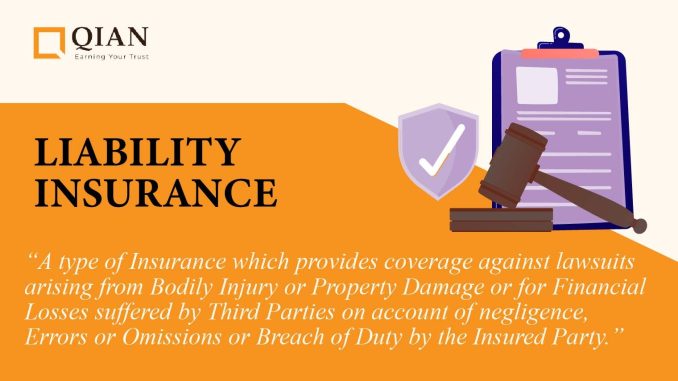
For any entrepreneur, launching and growing a small business is an act of passion, dedication, and calculated risk. You pour countless hours and personal capital into building something from the ground up, creating a product or service you believe in. Amid the daily whirlwind of managing operations, serving customers, and driving growth, it can be easy to push certain administrative tasks to the back burner. Yet, one of the most critical safeguards for your hard-earned success, liability insurance, is often misunderstood or dangerously overlooked. It’s not simply an expense on a balance sheet; it is the fundamental shield that protects your business from the unpredictable nature of commerce and human interaction.
At its core, liability is the legal responsibility for one’s actions or inactions. In the business world, this responsibility extends to your products, your services, and your premises. A single unforeseen event—a customer slipping on a wet floor, an employee damaging a client’s property, or a flaw in a product causing harm—can trigger a lawsuit. Without adequate protection, the legal fees and potential settlement costs associated with such an incident could be financially devastating, capable of wiping out years of hard work and even threatening your personal assets. This is where liability insurance steps in, acting as a critical financial buffer between your business and a potentially catastrophic claim.
The most foundational form of this protection is General Liability Insurance (GLI). Think of this as the all-purpose safety net for your business. It covers claims of bodily injury, property damage, and personal injury that may occur on your business premises or as a result of your operations. For example, if you own a retail boutique and a customer trips over a display rack and breaks their arm, your GLI policy would cover their medical expenses and any associated legal costs if they decide to sue. Similarly, if you’re a contractor and your team accidentally damages a client’s expensive furniture while working in their home, this insurance would cover the cost of repair or replacement. It addresses the everyday, tangible risks of running a business that interacts with the public.
However, the scope of liability extends beyond physical incidents. For businesses that provide professional advice or services, a different kind of risk emerges. This is where Professional Liability Insurance, also known as Errors and Omissions (E&O) insurance, becomes indispensable. This policy protects you against claims of negligence, misrepresentation, or mistakes in the professional services you provide. Consider a marketing consultant who advises a client on a campaign that ultimately fails to deliver results and causes a financial loss, or an accountant who makes an error on a tax filing, leading to penalties for their client. In these instances, the client could sue for damages. Professional Liability Insurance would cover the legal defense costs and any settlement or judgment, protecting the business from the financial consequences of a professional mistake.
Furthermore, if your business manufactures, distributes, or sells a physical product, you face another distinct layer of risk covered by Product Liability Insurance. This policy specifically addresses claims arising from a product causing injury or damage. Imagine you own a small business that produces artisanal food products. If a batch is contaminated and causes food poisoning, you could face numerous lawsuits from affected customers. Likewise, if a children’s toy you sell has a design flaw that makes it a choking hazard, the potential for liability is immense. Product Liability Insurance is designed to handle these specific scenarios, which are typically excluded from a general liability policy.
In today’s interconnected world, a discussion about liability would be incomplete without mentioning cyber liability. As more businesses store sensitive customer data, from email addresses to credit card information, the risk of a data breach has become a significant threat. Cyber Liability Insurance helps cover the immense costs associated with a breach, including notifying affected customers, credit monitoring services, public relations efforts to restore your reputation, and any resulting fines or legal actions.
Ultimately, viewing liability insurance as a mere cost is a fundamental miscalculation. It is a strategic investment in the longevity and resilience of your enterprise. The premium you pay is a small, predictable expense that transfers the risk of a large, unpredictable, and potentially ruinous loss to an insurance carrier. It provides peace of mind, allowing you to focus on innovation and growth, confident that a safety net is in place. For any serious small business owner, securing the right liability coverage isn’t just a good idea—it is an essential business practice.