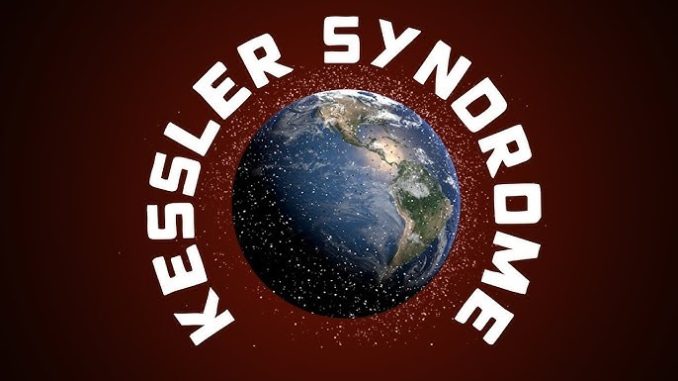
In the ever-expanding frontier of space, humanity has launched thousands of satellites and spacecraft, creating an intricate web of technology that underpins much of our modern world – from GPS navigation and global communication to weather forecasting and scientific research. Yet, this remarkable proliferation has inadvertently given rise to a pressing concern: space debris. At the heart of this issue lies a theoretical, yet increasingly plausible, scenario known as the **Kessler Syndrome**. Proposed in 1978 by NASA scientist Donald J. Kessler, this concept describes a terrifying chain reaction where the density of objects in low Earth orbit (LEO) becomes so high that collisions between them exponentially increase the amount of space debris, potentially rendering certain orbital altitudes unusable for generations. Understanding the Kessler Syndrome isn’t just a matter for astrophysicists; it’s a critical consideration for anyone reliant on satellite technology, which, in today’s interconnected business world, means virtually everyone.
The essence of the Kessler Syndrome lies in a self-sustaining cascade of destruction. Imagine a relatively crowded stretch of highway where a minor fender-bender occurs. This initial collision creates fragments of debris. These fragments, traveling at orbital velocities of tens of thousands of kilometers per hour, become high-speed projectiles. Even a tiny piece, like a fleck of paint, carries enough kinetic energy to cause catastrophic damage to an operational satellite. When these new fragments collide with other satellites or existing debris, they create even more fragments, which then go on to cause further collisions, and so on. This positive feedback loop or “collisional cascading” escalates exponentially, potentially filling critical orbital highways with so much untrackable, high-velocity junk that launching new satellites or even maintaining existing ones becomes incredibly risky, if not impossible.
The real danger of the Kessler Syndrome lies in its potential to disrupt the fabric of modern society. Our reliance on satellites has grown exponentially since Kessler first articulated his theory. Telecommunications, internet services, precise navigation (GPS), weather monitoring, financial transactions, and even national security all depend heavily on a healthy, accessible low Earth orbit. Should a severe Kessler event occur, leading to widespread destruction of operational satellites, the ramifications could be profound. Imagine widespread internet outages, disruptions to global supply chains reliant on GPS tracking, impaired emergency services, and a significant setback to scientific research and space exploration. From a business perspective, such an event would represent an unparalleled systemic risk, potentially unraveling vast sectors of the global economy that operate on the assumption of continuous satellite connectivity.
The current state of affairs suggests that while we haven’t reached a full-blown, unstoppable Kessler Syndrome, the early stages are increasingly evident. Decades of space launches, coupled with accidental collisions and even intentional anti-satellite missile tests (such as Russia’s 2021 test which created thousands of new fragments), have significantly increased the population of orbital debris. Currently, tens of thousands of objects larger than 10 centimeters are actively tracked, but millions of smaller, untrackable pieces also pose a significant threat. Operational satellites, including the International Space Station, routinely perform evasive maneuvers to avoid collisions, a testament to the already crowded and hazardous environment. Some experts warn that certain orbital regions, particularly in low Earth orbit (around 500-1000 km altitude), are already at or near a critical density where collisions could soon outpace natural atmospheric drag as the primary driver of debris growth.
So, should we worry? The short answer is yes, we should be concerned, but also optimistic about ongoing efforts. The Kessler Syndrome is not a guaranteed doomsday scenario, but a credible risk that demands proactive attention and international cooperation. It’s a testament to humanity’s foresight that the problem was identified decades ago, allowing time for mitigation strategies to be developed and implemented.
Numerous initiatives are underway to address the growing threat of space debris. One key strategy is **debris mitigation**, focusing on preventing new debris from being created. This includes designing satellites to actively de-orbit (either by controlled re-entry into Earth’s atmosphere to burn up or by moving to “graveyard orbits” further away from operational zones) within a certain timeframe (e.g., 25 years, though some advocate for 5 years) after their mission ends. It also involves “passivation” of defunct rocket bodies and satellites to eliminate stored energy (like leftover fuel) that could lead to accidental explosions. International guidelines, such as those from the Inter-Agency Space Debris Coordination Committee (IADC) and the United Nations, promote these best practices.
Beyond prevention, **active debris removal (ADR)** is gaining significant traction. This involves developing technologies to actively remove existing large pieces of space junk from orbit. Concepts being explored range from giant nets and harpoons to robotic arms that capture defunct satellites, and even laser-based systems that could nudge smaller debris into lower orbits where they would burn up. Missions like ESA’s ClearSpace-1, slated for launch around 2025, aim to demonstrate the feasibility of capturing and de-orbiting a specific piece of large debris. While technically challenging and costly, ADR is seen as a necessary long-term solution to clean up the existing orbital mess.
Furthermore, improved **space situational awareness (SSA)** and **collision avoidance systems** are crucial. This involves better tracking of orbital objects, more accurate prediction of potential collisions, and the ability for satellite operators to coordinate evasive maneuvers. Companies launching large constellations of satellites, like SpaceX’s Starlink, are developing sophisticated autonomous collision avoidance systems, which perform thousands of maneuvers annually.
In conclusion, the Kessler Syndrome is a profound reminder that our activities in space, while transformative, carry significant environmental responsibilities. It’s a complex challenge that underscores the interconnectedness of our technological advancements with the sustainability of the space environment. While the threat is real and growing, the collective efforts of space agencies, governments, and private companies towards debris mitigation, active removal, and enhanced space traffic management offer a path forward. Continued investment in these solutions, coupled with robust international policy and regulation, will be essential to ensure that low Earth orbit remains a safe and accessible resource for future generations, allowing humanity to continue harnessing the invaluable benefits that space technology provides.