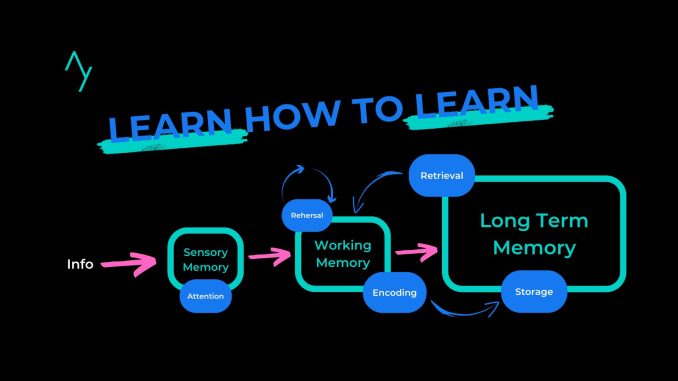
Remembering information effectively isn’t just about how much time you spend studying, but how you approach the process. Among the most effective learning techniques backed by cognitive science is active recall. This method goes beyond passive review and challenges your brain to retrieve information, strengthening your memory in the process. While it’s frequently used by students preparing for exams, active recall holds valuable potential for professionals, lifelong learners, and anyone looking to sharpen their memory and retain information more reliably.
At its core, active recall is simple: it involves intentionally retrieving information from memory without looking at the source. Rather than rereading a textbook or reviewing notes repeatedly, you try to recall what you’ve learned from memory. This process forces your brain to work harder, which results in stronger neural connections and deeper learning. Research consistently shows that testing yourself on material—even if you make mistakes—is far more effective for retention than passively reviewing it multiple times.
What makes active recall so powerful is the way it mimics the natural way we use information. In the real world, whether you’re in a meeting, giving a presentation, or solving a problem, you don’t have the luxury of flipping through notes. You’re relying on what you know. Practicing retrieval not only prepares you for those moments, but also makes it more likely that the knowledge will come to you quickly and accurately when needed.
One way to understand the power of active recall is by comparing it to building muscle. Just as lifting weights causes micro-tears that rebuild stronger fibers, mentally retrieving information stresses your memory in a productive way. Each time you try to recall a fact or concept, even if you struggle at first, you’re effectively training your brain. That struggle, in fact, is a crucial part of the process—it’s where the learning happens.
Implementing active recall doesn’t require expensive tools or complicated systems. It can be as straightforward as closing your book after reading a page and trying to summarize what you just learned. Flashcards are another classic tool that leverage this technique well. The effectiveness of a flashcard lies not in how often you look at it, but in how often you try to answer the question on the front before turning it over. Apps like Anki and Quizlet enhance this further by incorporating spaced repetition, another scientifically supported learning strategy that schedules review at intervals to optimize memory retention over time.
In professional settings, active recall can be especially useful for mastering complex concepts, preparing for certifications, or keeping up with evolving industry knowledge. For example, if you’re learning about a new regulatory framework or a technical system, you might read the material, then write down key points from memory. The goal isn’t perfection—it’s the act of trying that reinforces the knowledge. In meetings, rather than referring constantly to notes, you can challenge yourself to summarize key talking points beforehand. The more often you retrieve that information, the more natural it becomes to discuss it fluidly and confidently.
Active recall can also be applied in group environments. Study groups, team trainings, or peer discussions offer great opportunities to practice retrieval collaboratively. Explaining a concept to someone else not only tests your own understanding but helps uncover gaps in knowledge that passive review would likely miss. It also deepens the material through conversation, encouraging you to think about it from multiple angles.
It’s worth noting that active recall can be mentally taxing, especially compared to simply rereading or watching videos. But that mental effort is exactly what makes it effective. Like physical training, consistency matters more than intensity. Even short, focused sessions of active recall practiced regularly can yield significant results. Instead of cramming, which often leads to shallow memorization and quick forgetting, this method fosters long-term understanding and recall.
Another benefit of active recall is its versatility. It works well with any subject—whether you’re learning languages, memorizing data, understanding theories, or recalling historical events. It scales with your needs, from preparing for a major professional certification to retaining names and facts for a business pitch. And it integrates easily into daily routines. Whether it’s jotting down a summary of a meeting from memory, reviewing a concept while walking, or doing mental quizzes during a commute, active recall adapts to how you live and learn.
Many people find that incorporating a journal into their learning routine can enhance active recall. By regularly writing down what you’ve learned that day or week without referencing materials, you’re building a personalized and memory-enhancing review process. This also provides a record you can look back on to measure progress, reflect on what you’ve retained, and identify areas where you may need more review.
In a world where information is abundant and easily accessible, the ability to remember and apply what you’ve learned is a competitive advantage. Active recall empowers learners and professionals alike to move beyond surface-level understanding and toward true mastery. It helps shift the mindset from simply consuming information to internalizing it. The beauty of this approach lies in its simplicity and effectiveness—by engaging your mind more deliberately, you unlock its full potential.
So whether you’re studying for a licensing exam, onboarding new knowledge for a project, or just striving to remember more of what you read and hear, consider integrating active recall into your learning habits. You may find that not only does your memory improve, but so does your confidence in using the knowledge when it counts.